

S. C. Jamir
Politicians · Nagaland
This profile has not been claimed yet
Is this you or your business? Claim this profile to take ownership, update your information, and get the verified badge.
Log in first to claimDr. S. C. Jamir is a legendary Indian statesman and the former Chief Minister of Nagaland (serving five terms). He is the last surviving signatory of the 16-Point Agreement that led to the creation of Nagaland state. A veteran diplomat, he has also served as the Governor of Goa, Maharashtra, Gujarat, and Odisha. He is widely regarded as the "Architect of Modern Nagaland" for his lifelong commitment to the state's integration and development.
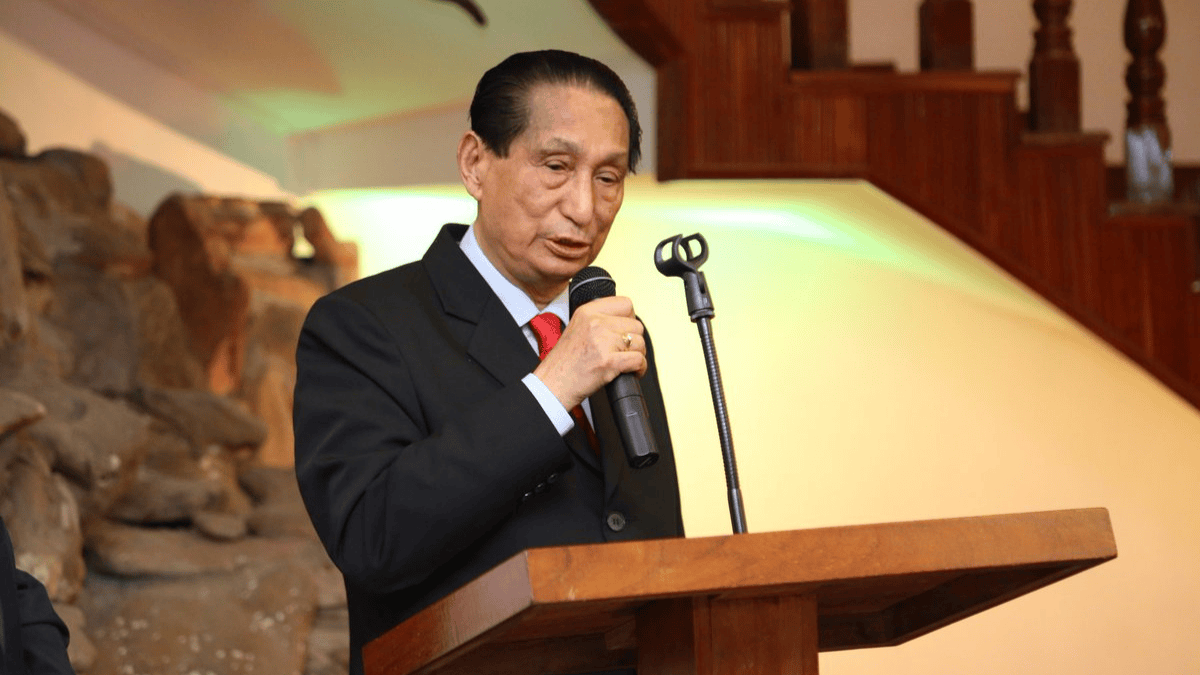
| Name | Senayangba Chubatoshi Jamir |
|---|---|
| Born | 17 October 1931 |
| Nationality | Indian |
| Occupation | Politician, Diplomat |
| Known For | Former Chief Minister of Nagaland and former Governor of several Indian states |
| Political Party | Indian National Congress |
| Tribe | Ao Naga |
| Hometown | Ungma, Mokokchung District, Nagaland |
| Education | B.A. and LL.B., Allahabad University |
| Marital Status | Married |
| Spouse | Imkonglemla Jamir |
Senayangba Chubatoshi Jamir (born 17 October 1931), widely known as S. C. Jamir, is one of the most prominent political leaders in the history of Nagaland. A senior figure of the Indian National Congress, he served multiple terms as the Chief Minister of Nagaland and later held gubernatorial positions in several Indian states including Goa, Maharashtra, Gujarat, and Odisha. Jamir played an important role in the political development of Nagaland and was associated with the Naga People’s Convention that helped shape the formation of the state within the Indian Union.
1. Early Life and Education
S. C. Jamir was born in Ungma village in Mokokchung district, one of the oldest and most historically significant villages of the Ao Naga community. He grew up in a family with a strong sense of social responsibility and community leadership.For his higher education, Jamir pursued academic studies outside Nagaland. He completed his intermediate education at Scottish Church College in Kolkata and later studied law and political science at Allahabad University, where he obtained both a Bachelor of Arts and a Bachelor of Laws degree.His time at Allahabad exposed him to the political ideas and national debates of post-independence India, which later influenced his involvement in public affairs and governance.2. Involvement in the Naga People’s Convention
During the late 1950s and early 1960s, Jamir became actively involved in the Naga People’s Convention (NPC), a political body that sought a peaceful and constitutional solution to the Naga political question.He served in an important organizational role within the NPC and participated in discussions that eventually led to the historic 16-Point Agreement with the Government of India. This agreement paved the way for the creation of Nagaland as a separate state in 1963.Because of his involvement in these negotiations, Jamir is often regarded as one of the early architects of Nagaland’s political foundation within the Indian constitutional framework.3. Entry into National Politics
Jamir’s political career expanded rapidly after Nagaland’s formation as a state. In the early 1960s he became one of the first political representatives from Nagaland at the national level.He served as a Member of Parliament and later held positions in the Union Government of India. During this period he worked in ministries dealing with areas such as railways, labour, and agriculture.These roles helped establish him as a national-level political figure from the Northeast and strengthened his connections with central leadership in New Delhi.4. Chief Minister of Nagaland
S. C. Jamir served several terms as the Chief Minister of Nagaland across different decades. His leadership was characterized by efforts to strengthen administrative institutions and promote development within the young state.During his tenure the state government worked on expanding infrastructure, strengthening administrative structures, and improving rural development programs.Jamir was also known for taking a firm position on the constitutional status of Nagaland and advocating solutions to political challenges through dialogue and democratic processes.5. Governor of Indian States
After concluding his active role in state politics, Jamir was appointed Governor in several Indian states.He served as Governor of Goa, later as Governor of Maharashtra, and subsequently as Governor of Odisha. During this period he also briefly held additional responsibility as the acting Governor of Gujarat.His long experience in governance made him one of the few leaders from the Northeast to serve in multiple Raj Bhavans across the country.6. Later Public Role and Views
Even after retiring from active politics, Jamir has remained an influential voice in public discussions concerning Nagaland and the wider Naga political issue.He has frequently emphasized the importance of dialogue, peaceful negotiation, and development-oriented governance in addressing the region’s long-standing political challenges.His perspectives continue to be referenced in discussions related to the Naga peace process and the future political direction of the state.7. Personal Life and Recognition
S. C. Jamir married Imkonglemla Jamir in 1958, and the couple has five children. His son, C. Apok Jamir, has also been involved in public life and politics.Throughout his career Jamir has received various recognitions for his contributions to governance and public service. In 2020 he was awarded the Padma Bhushan, one of India’s highest civilian honors, in recognition of his long career in public affairs.He is widely regarded as one of the most experienced political figures from Nagaland and a significant personality in the state’s modern political history.👁 Profile Views: 221
Actions
More Profiles
 Hekani Jakhalu
 Hekani Jakhalu Kense is a historic figure in Naga politics,…
 Salhoutuonuo Kruse
 Salhoutuonuo Kruse is a historic figure in Indian politics as…
 Temjen Imna Along
 Temjen Imna Along is the Minister of Tourism and Higher…
 Neiphiu Rio
 Neiphiu Rio is the 9th and current Chief Minister of…
 Nagaland AI
 Nagaland AI is an AI-powered chatbot platform designed to provide…

Kaam Ase – Nagaland Job Portal
Kaam Ase is a Nagaland job portal that connects workers,…

Mvüko Koza
Moko Koza (Mvüko Koza) is an award-winning Indian rapper, songwriter,…

Hokato V
Hokato V. is a prominent political leader and social advocate…
SShikaho Achumi
Shikaho Achumi is defined by his vibrant personality and selfless…

Heguilung
Hailing from Beisumpuiloa near Ntangki National Park, Heguilung combines his…

Rokokhotuo
Rokokhotuo Kehie, born in 2005 in Medziphema, is a hardworking…